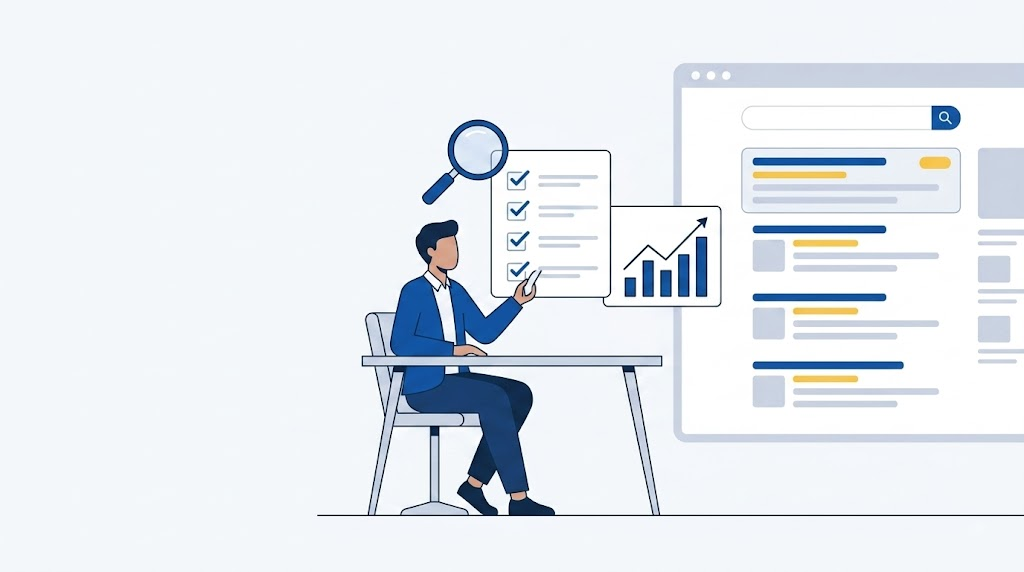
A digital marketing agency improves SEO performance by fixing technical issues that block crawling, restructuring content around real search intent, building genuine authority through links and citations, and increasingly, making a site readable and citable by AI answer engines — not just Google. Each of these is a distinct workstream, and a competent agency runs them in parallel rather than treating SEO as one generic activity.
1. Technical Fixes That Remove Crawling and Indexing Blockers
Before content or links can help, a site needs to be technically sound: fast load times, mobile usability, clean URL structure, no broken links or redirect chains, and correct indexing so search engines and AI crawlers see the right pages. Agencies typically start here because every other improvement compounds on top of a technically healthy site — content on a slow, broken site underperforms no matter how good the writing is.
2. On-Page Restructuring Around Real Search Intent
An agency audits existing pages against what people are actually searching for, then restructures title tags, headings and internal linking to match that intent — not just inserting keywords, but answering the actual question a visitor typed. Pages that directly and clearly answer a query in the first few sentences perform better both for classic rankings and for being pulled into featured snippets.
3. Content Built to Rank and to Be Cited
New content should be built around genuine content gaps — topics competitors rank for that the site doesn't cover, or questions customers actually ask. Good agencies write with real E-E-A-T signals (genuine author expertise, first-hand experience, cited sources) because that same content is what AI answer engines evaluate for trustworthiness when deciding what to cite.
4. Link Building and Off-Site Authority
Backlinks and digital PR remain a core ranking factor, but they also matter for AI search: large language models draw on the same third-party sources — press coverage, review sites, forums, industry directories — to decide what a brand actually is and whether to recommend it. An agency's link building should be white-hat and traceable, never a black-box "network."
5. AEO and GEO: Optimizing for Answers, Not Just Rankings
A 2026-capable agency layers in Answer Engine Optimization (structured FAQ and Article schema, question-formatted headings, direct-answer openings) and Generative Engine Optimization (entity consistency across the web, an llms.txt file, genuine third-party citations) on top of classic SEO. This is what determines whether a brand shows up when someone asks ChatGPT or Perplexity a question in its category, not just when someone searches Google.
6. Measurement That Actually Tracks Improvement
Improvement should be visible in more than one metric: organic traffic growth, keyword position movement, featured-snippet wins, and increasingly, AI citation visibility. A weekly or monthly report that explains what changed and why — not just a rankings screenshot — is what separates real reporting from a vanity dashboard.
What real improvement looks like: as one published example, a RS Web Solutions client saw organic leads grow from 3 to 34 per month and branded search from 12 to 190 per month, while paid CPL improved alongside it — a sign that technical, content and off-site work were compounding together rather than working in isolation.
Want a Clear Read on What's Actually Holding Your SEO Back?
Get a free audit covering technical health, content gaps and AEO/GEO readiness.